
Networking Architecture
Multiplayer
Offers a capability for multiple players to act within the same world at the same time.
A complex feature that has a significant impact on the game architecture, touching almost every fundamental structure.
Multiplayer categories
- single-screen multiplayer
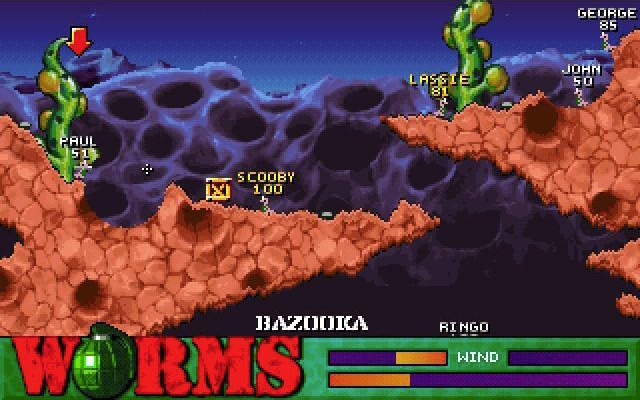
- split-screen multiplayer
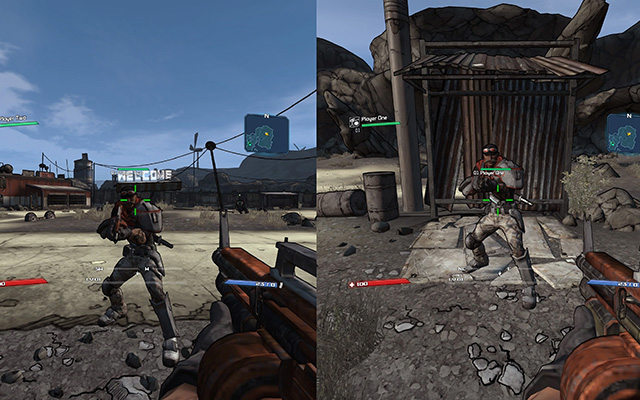
- networked multiplayer
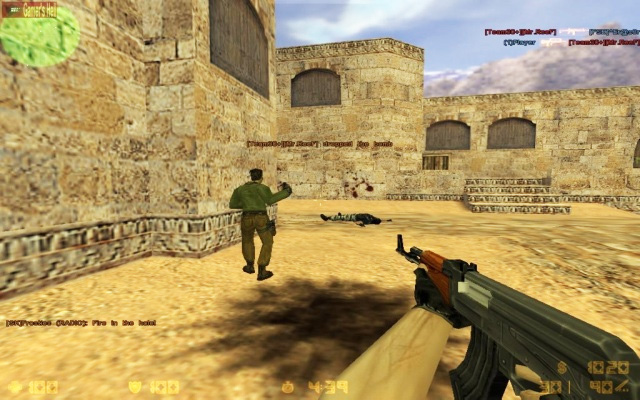
- MMOG
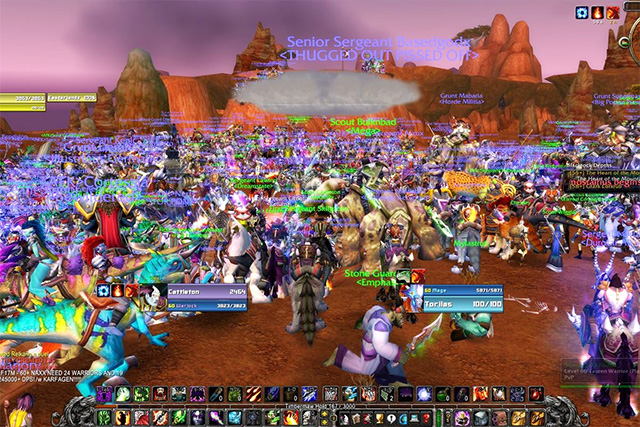
- Cloud Gaming
Multiplayer history
Local multiplayer games
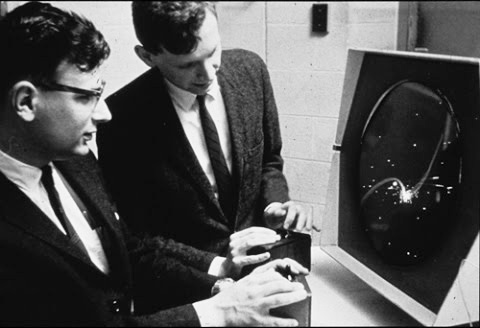
- Spacewar! (1962)
Networked multiplayer games
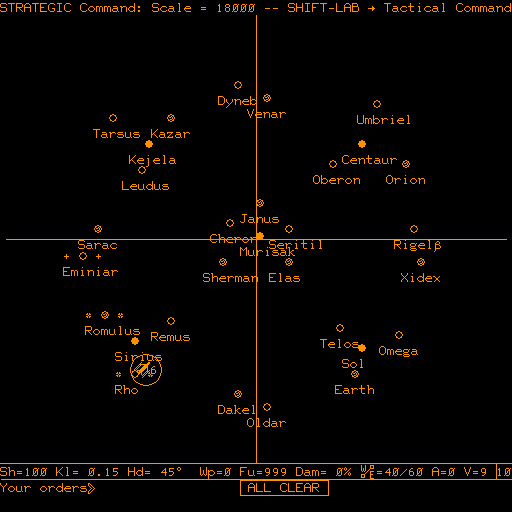
- Empire (1973)
Local area network games
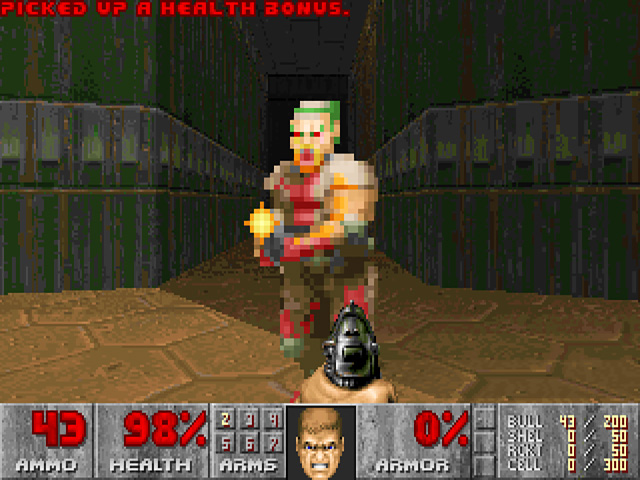
- Doom (1993)
Online multiplayer games
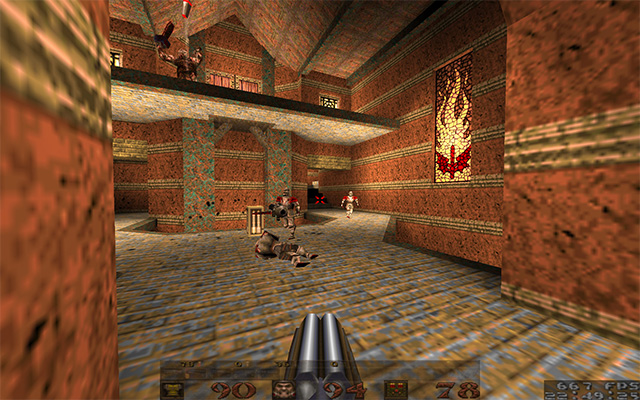
- Quake (1996)
- Unreal (1998)
Online-only games
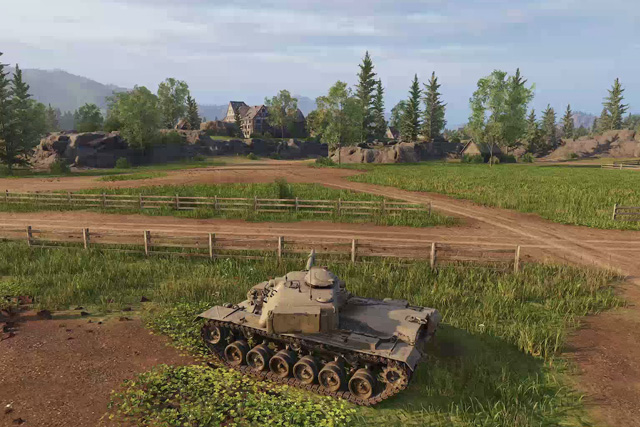
- World of Tanks (2010)
- Diablo 3 (2012)
MMO
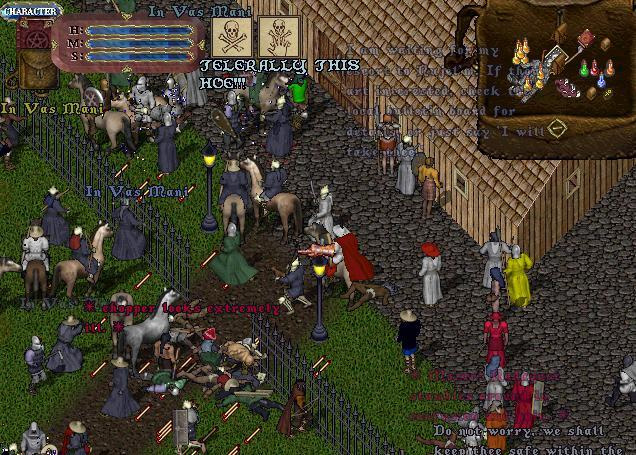
- Ultima Online (1997)
- World of Warcraft (2004)
Then and now
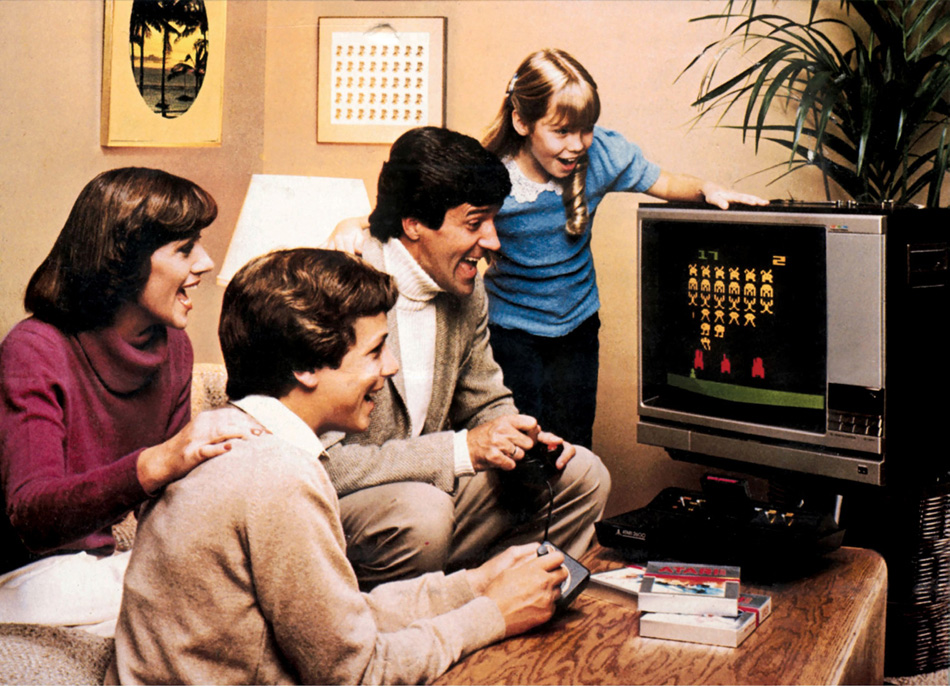
Multiplayer in 1977
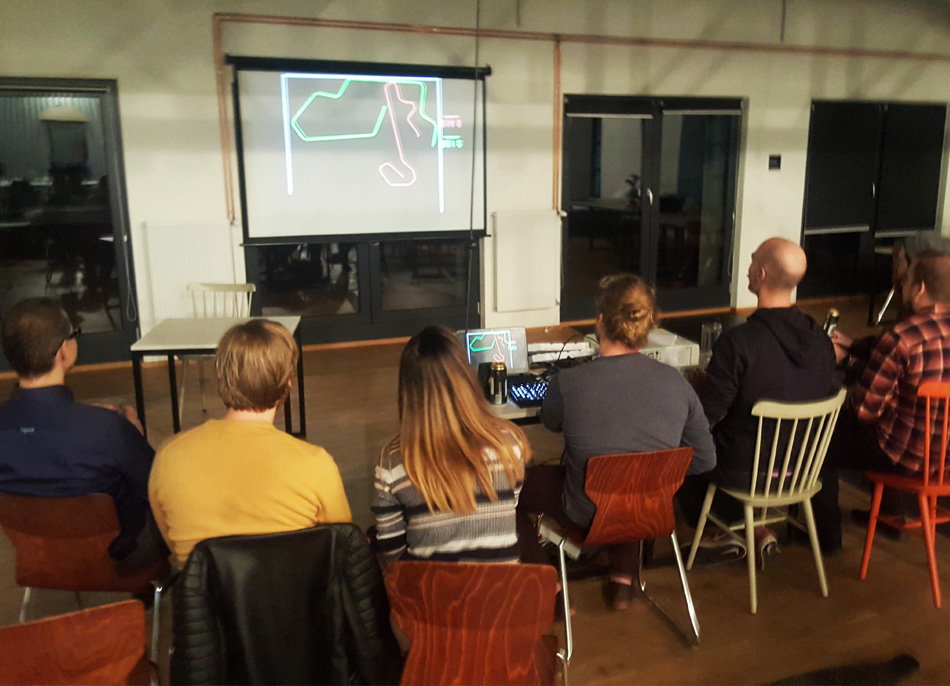
Multiplayer now
Issues
- the main objective - how to synchronize several universes
- all clients have to achieve a certain degree of synchrony
- attributes that affect the gameplay: capacity, speed, latency, jitter, packet loss
- there is no known real-world picture for this type of problem
- it's easy to convert multiplayer game into a single-player game
- it's very difficult to implement multiplayer features into a single-player game
Methods
- transfering a complete game state to all clients - for simple games
- transfering a minimal subset to reconstruct the rest - more common
Topologies
- peer-to-peer (not used anymore)
- client-server

Peer-to-peer architecture
- each device exchanges data with each other in a fully connected graph
- used in Doom, early Command & Conquer series, Age of Empires, Starcraft
- given peers, each must have connections -> in total
- methods: single master, partial authority, full replication
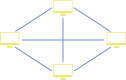
Peer-to-peer games
Doom (1993)
- 14.4 kbps PPP or 28.8 kbps SLIP
- each turn player inputs were exchanged with other peers
- you had to wait for the inputs from the most lagged player
- every 30ms, the input from each player is sampled into a tic command
- when the tic commands for all players have been received, the game advances its state
Age of Empires (1997)
- for 8-player battle there could be up to 400 units
- used Turn Timer - queue for commands
- AoE synchronizes the commands each player issued, rather than units
- all commands during 200ms are saved into a buffer
- when the 200-ms-frame is over, all commands for a player's turn are transmitted to others
Client-Server architecture
- devices, connections
- server must handle more messages per second
- server quickly becomes the bottleneck (lack of power and bandwidth)
- Dedicated server - only runs the game state and communicates
- Listen server - server is an active participant in the game itself
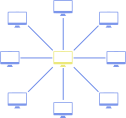
Example: Quake
- the first game that used partial reliability
- each client acts as a dumb terminal
- outputs are picked up by the prediction layer
- the server runs at 20 FPS, while the client runs at 60 FPS
Command
- the elementary unit of communication
- used to udpate a position of the player, orientation, HP,...
- reliable commands (with impact on the game state) have to be confirmed
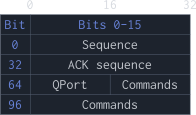
NetChannel header
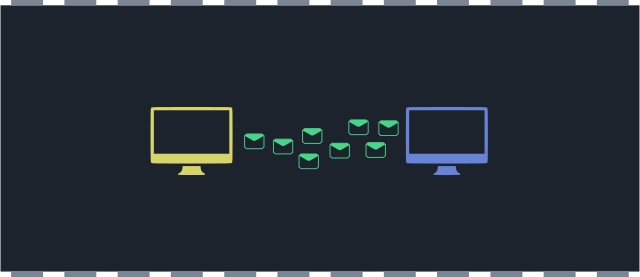
Transport
TCP vs UDP
- as opposed to SW applications, games have two main types of messages
- changes to the gameplay (actions, events) need to be confirmed
- streaming data (positions) don't need to be confirmed
- critical events may have higher priority over others
- UDP represents a basic streaming protocol onto which engines built a customized gaming protocol
Using TCP is the worst possible mistake you can make when developing a multiplayer game.
Multiplayer engine architecture
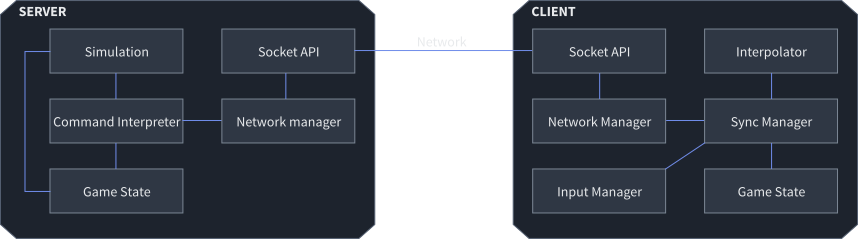
- the server is running the game and clients only process inputs and display results
Issues
- each player has only partially consistent view of the game world
- in some cases, the server may disagree with the client's state
- there is a delay between taking an action an observing the result
Example: Message Header
- SEQ number - sequential number of the message
- ACK number - number of another message to be confirmed
- ACK bit array - confirmation flags for previous 32 messages
- Type - type of the message (update, disconnect, command,...)
- ActionID - id of particular action
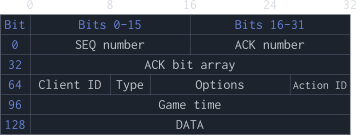
Message Types
Stream
- doesn't need to be confirmed, contains a collection of continuous values (e.g., position change)
Snapshot
- complete information of the game state, sent either on demand or at given intervals
Event
- messages that have an impact on the game state, have to be confirmed
- e.g.: UNIT_CREATED, UNIT_DESTROYED, BUILDING_COMPLETED
Action
- high-priority messages (player's inputs, fire button,...)
Procedure Call
- a generic message that allows to call any function (play sound, load assets, reset animation)
Connection messages
- messages for handshake, ID assignment, disconnect, etc.
Beacon
- regular messages to inform the server that the connection is still on
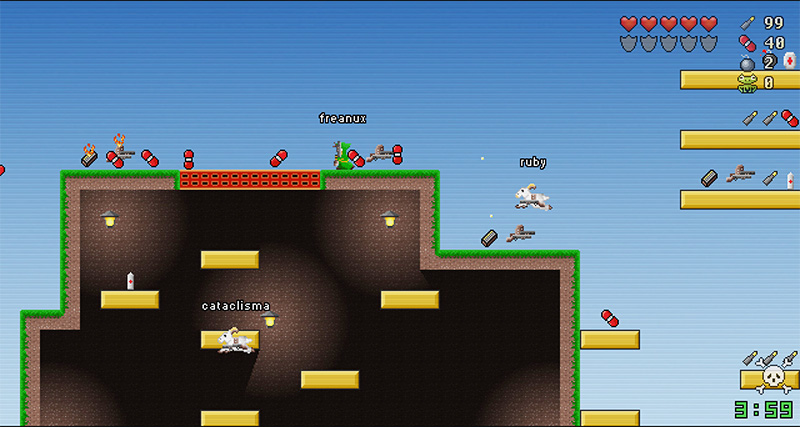
Example: Goat Attacks
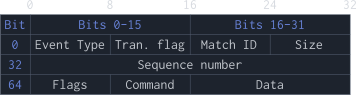
Serialization
- a large game world can have hundreds of moving objects
- we need to remove any information that doesn't need to be sent
- messages should be as close in size to MTU (~1500B) as possible
Example with no optimization
- RTS battle
- 5 players
- 500 moving units
- each unit has 20 attributes of 32-bit size -> 80 B per unit
- the server sends 30 messages per second
- header size is 42B (IP + UDP + networking header)
- required bandwidth for the server: Mbps
Serialization - Binary Footprint
- we serialize everything - not very robust solution
struct Mage {
int health;
int mana;
}
void Serialize(const Mage* mage) {
SendMessage(reinterpret_cast<const char*>(mage), sizeof(Mage));
}
void Deserialize(const Mage* output) {
ReceiveMessage(reinterpret_cast<char*>(output), sizeof(Mage));
}

Health = 10, Mana = 14; Little Endian

Serialization - Streams
- streams allow us to customize what attributes to serialize and how
- better solution for collections
struct Mage : public Streamable {
vector<Item*> items;
int health;
int mana;
void SaveToStream(NetWriter* writer) {
writer->WriteDWord(health);
writer->WriteDWord(mana);
writer->WriteDWord(items.size());
for(auto item : items) item->SaveToStream(writer);
}
void LoadFromStream(NetReader* reader) {
health = reader->ReadDWord();
mana = reader->ReadDWord();
int itemsCount = reader->ReadDWord();
for(int i=0; i<itemsCount; i++) {
items.push_back(new Item(reader));
}
}
}
Compression
Compression of bits
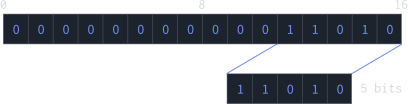
- it is helpful to represent values with as few bits as possible
- we can work with limited range and precision
Entropy Encoding
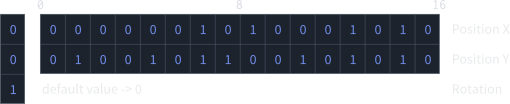
- we compress data based on how unexpected it is
- example: we can assume that the rotation is mostly 0, hence we can use only one bit to indicate this
Compression
Compression of attributes
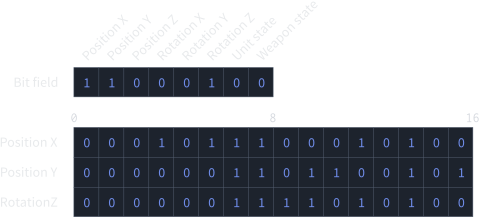
- we can serialize only attributes that vary
- each object has a bit field that indicates which attributes follow in the stream
Compression of the payload
- Huffman encoding, run-length encoding, LZ4,...
Compression
Delta messages
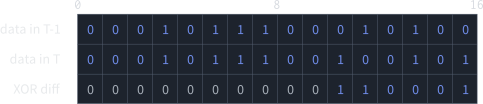
- if a number doesn't change much, nor will its bits
- between two frames, there is only a few changed bits for common attributes (position, rotation,...)
- we store only differences by using XOR operation and compress the data
- very effective but sensitive to packet loss
- we can store 2/3 of attributes as diffs and 1/3 as full data - we will only need 3 consecutive packets to retrieve the full state
Replication
- the act of transmitting a state of an object from one device to another
- each object must be uniquely identified (network ID)
- the network message contains a type of an object and all parameters required to construct it
switch(actionType) {
case OBJECT_CREATED:
int objectType = reader->ReadDWord();
auto factory = creatorManager->FindObjectFactory(objectType);
auto newInstance = factory->CreateInstance(reader); // parse parameters
objects.push_back(newInstance);
break;
case OBJECT_DELETED:
int objectId = reader->ReadDWord();
sceneManager->removeObjectById(objectId);
...
}
Reliability
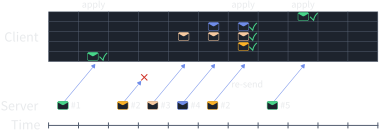
- packets may get lost
- server keeps sending messages that have an impact on the game state until the client accepts them
Ordering
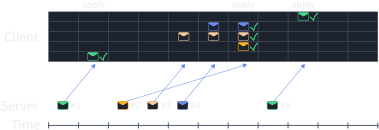
- packets may arrive in a different order
- the client shouldn't apply a command message to its state before it applies all previous messages
Latency
Latency
- the amount of time between an observable cause and its observable effect
- e.g. mouse click and a unit responding to its orders
Suitable latencies
- FPS: 16-60 ms
- RTS: < 250 ms
Non-network latency
- input sampling latency (~2 ms)
- rendering pipeline latency (< 16 ms)
- frame decoding latency for cloud gaming (~2-16 ms)
Network latency
- processing delay (encryption, routing)
- queuing delay (router can only process a limited number of packets at a time)
- transmission delay (information can't travel faster than the speed of light)

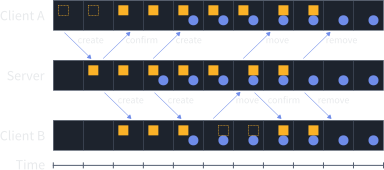
Latency Example
- both clients have the same latency
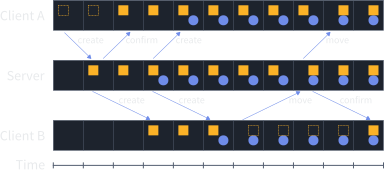
Latency Example
- client B has a higher latency

Synchronization
Interpolation
- client can run at 60 FPS, the server usually sends state updates at 10-30 FPS
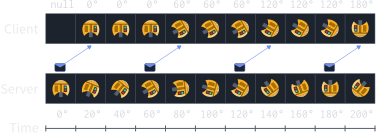
- Interpolation: whenever the client receives a new state, it smoothly interpolates to that state
- Problem: the object might change its interpolated value instantly (teleport)
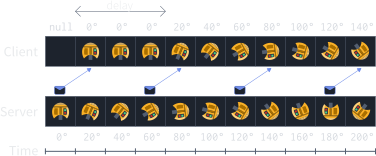
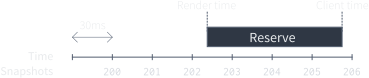
Interpolation Reserve
- client renders a state that is 2 frames old
- smooth interpolation, but we create artificial delay
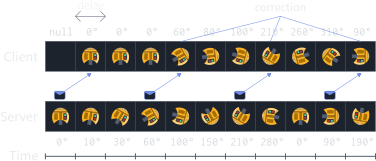
Extrapolation
- without interpolation reserve, the client tries to extrapolate
- results in jittery animation
Deterministic prediction
- interpolation reserve is precise but delayed behind the server
- the client is always at least 1/2 RTT behind the true state
- some attributes can be handled on client side completely (e.g. camera pose in FPS)
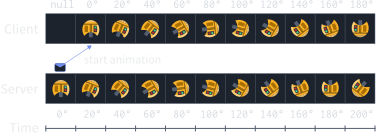
Prediction
- the client predicts the future value by running the same simulation code
- to perform extrapolation by 1/2 RTT, the client must approximate the RTT
Non-deterministic prediction
- non-deterministic values are hard to predict (steering behaviors, other players' movement,...)
- solution: make an educated guess and correct it when an update arrives
- Dead reckoning - process of predicting a behavior of an entity based on the assumption that it will keep doing what it's currently doing
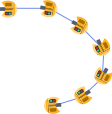
Server simulation
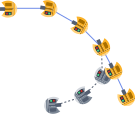
Client misprediction
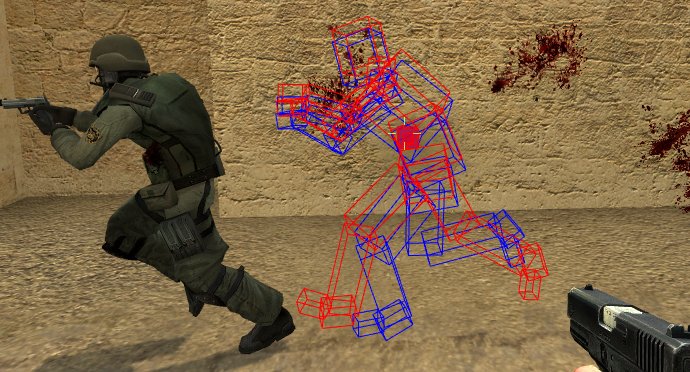
Server-side rewind
- dealing with instant actions that affect the gameplay (e.g. instant hit in FPS)
- occurs due to the inaccuracies of dead reckoning and time dilation
- server may change a state that has already been confirmed
Source engine's approach
- rewinds state on the server to exactly the state in which the player fired
- server stores the poses of every relevant object for X last frames and looks up the two frames between which the client was interpolating
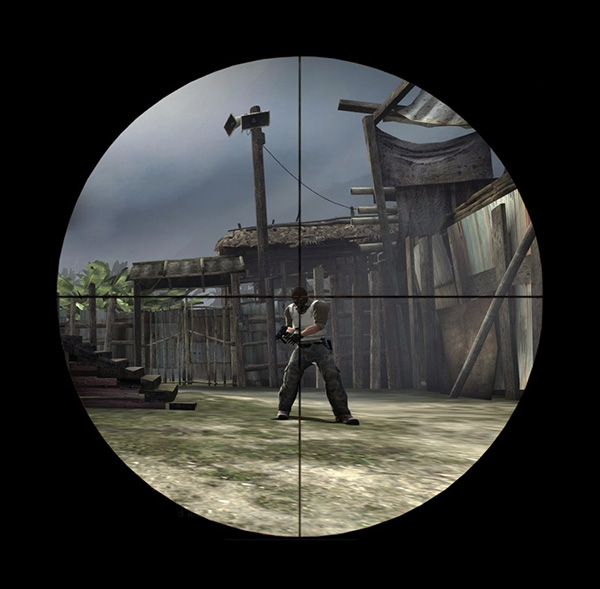
Wrong
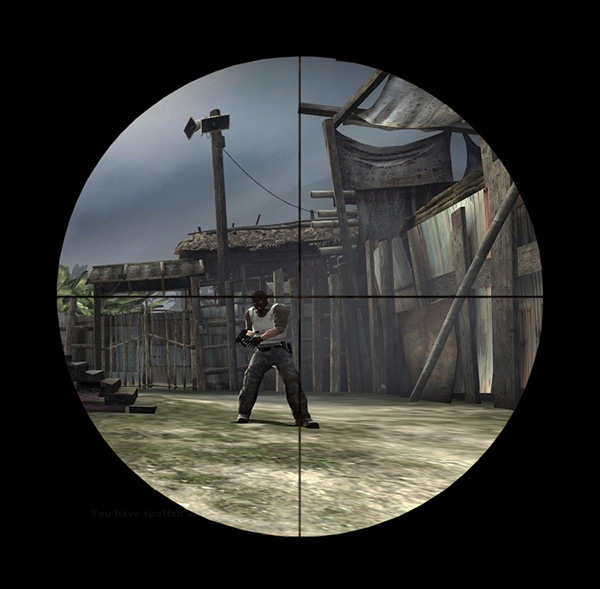
Correct

Example: Server-side rewind
- Client B has 3x higher latency than Client A
- Client B performed a change before Client A did
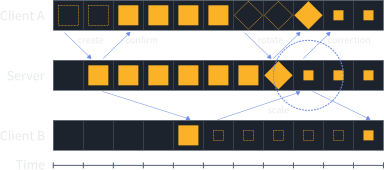
Latency handling summary
Time dilation
- delays the values by a few frames and interpolates to them
Deterministic prediction
- runs simulated code, masks latency and keeps the client's state in sync
Dead reckoning
- non-deterministic prediction
- client uses the last known state of an object to extrapolate future state
Server-side rewind
- the server buffers object positions for several frames to match the client's view when processing instant events
Example: Source engine
- server simulates the world at 30-60 FPS and sends 20 snapshots per second by default, using an interpolation reserve of 100 ms
- client samples inputs at 30-60 FPS and buffers snapshots for 100 ms
- server uses time dilation and rewind
Security
Classic threats
- packet sniffing, man-in-the-middle
- ghosting - scouting the players using multiple connections
Input validation
- players can't perform an action that is invalid
- only a client responsible for Player A can send an action that affects that player
Software cheat detection
- actively monitors the integrity of the game
- cheating SW can hook into the game, overwrite memory, modify files
- map hacking - removing fog of war and revealing resources
- bot cheat - bot that either plays the game or assists the player
- e.g. dummy levelling, aimbots
- Valve Anti-Cheat - available for games that utilize Steamworks SDK
- maintains a list of banned users, scans for known cheat programs
- Easy AntiCheat - prevents cheating on a technical level
Libraries
Torque Network Library (opentnl)
- uses ghost structures for object replication
- https://github.com/kocubinski/opentnl
ReplicaNet
- powerful library for object sharing (sessions)
RakNet
- complex networking library, free since 2014
- https://github.com/facebookarchive/RakNet
NetStalker
- library for interpolated object replication
- created as a bachelor thesis at FEL CTU
- https://github.com/smrkous/nsl
Netcode
- networking library for Unity
Lecture Summary

- I know the difference between P2P and client-server architecture
- I know what issues networking architecture may face
- I know what types of messages can be used in multiplayer games
- I know what replication is
- I know how interpolation works
- I know what server-side rewind is
- I know how games can deal with latency
Goodbye Quote
Now you see me, now you're dead.